

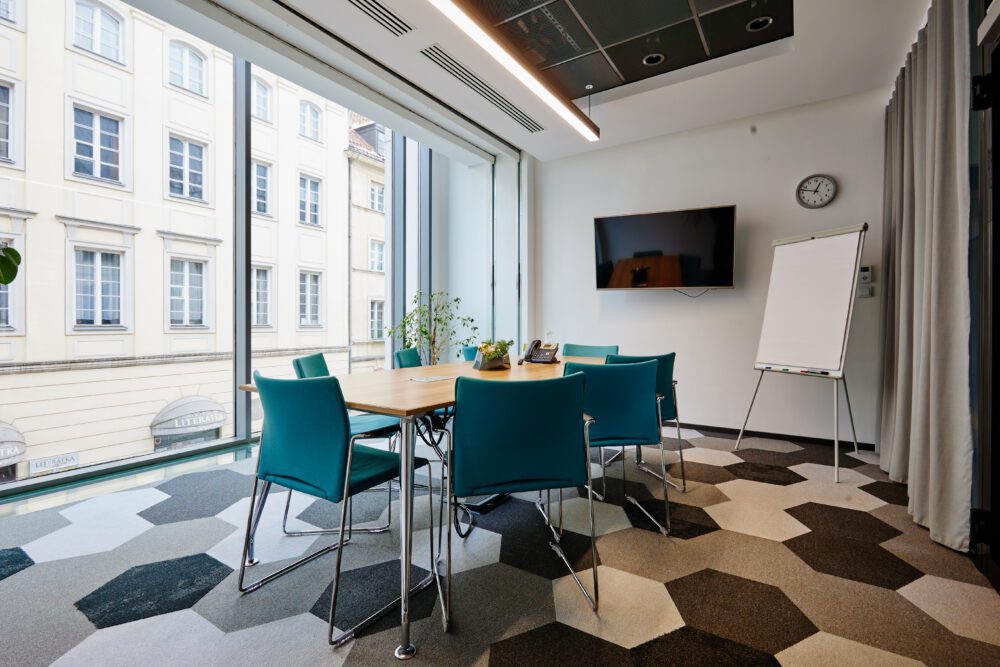
Deciding between coworking and renting a private office in Poland can shape your work-life balance, budget and mobility as an expat. This guide outlines key differences—costs, contracts, amenities, locations and legal/practical considerations—so you can choose the option that best fits your business needs and lifestyle.
Coworking vs. Office Poland
Coworking spaces in Poland offer flexibility, lower upfront costs and a ready-made professional environment ideal for freelancers, remote workers and small teams that value networking and agility. Monthly memberships and short-term passes reduce commitment, and many spaces in Warsaw, Kraków, Wrocław and Gdańsk include high-speed internet, meeting rooms, reception services and community events that accelerate client introductions and hiring. For expats prioritizing mobility and quick market entry, coworking removes the need for long leases, simplifies address use for business registration in many cases, and minimizes utility and maintenance responsibilities — though privacy, storage and bespoke branding options are limited.
Renting a private office provides control, permanence and scalability for companies needing confidentiality, custom setup or a fixed local presence for employees and clients. Leases typically demand longer commitments and higher monthly costs once utilities, maintenance and fit-out are included, but they allow full control over space layout, security and company signage. For expats establishing a Polish entity or hiring staff, a private office supports formal operations, easier payroll and clearer tax treatment, though legal requirements, deposits and administrative steps are more onerous. Choose coworking for agility and community; choose a private office when you need stability, privacy and a professional base to grow.
Cost vs. Value and Legal & Practical Context for Expat Entrepreneurs
For expat entrepreneurs weighing cost versus value, the primary financial calculus hinges on total occupancy cost, flexibility and the speed at which a chosen workspace enables revenue generation. Coworking tends to minimize upfront capital — memberships commonly range from roughly €150–€700+ per person per month — and removes obligations for fit-out, long-term utilities and building management, which preserves runway for marketing, product development or hiring. Private leases, by contrast, present lower per-m² base rents in some suburban or older-stock options (from about €6–€10/m²/month) but quickly escalate once service charges (€3–€8/m²/month), utilities, heating and one-off fit-out and compliance costs are included; prime central business districts can command €18–€35/m²/month for A-class space, and realistic budgeting should add 15–40% to the headline rent to capture gross occupancy cost. Serviced/flexible offices sit in the middle: they bundle fit-out, IT, reception and some utilities into a per-desk or per-suite fee (typically between coworking and full private-lease costs), trading higher unit pricing for operational simplicity and often short-term scalability — a critical trade-off when cash flow is uncertain and time-to-market matters.
Beyond headline pricing, legal and administrative variables materially affect the true cost and operational viability for expat founders. Business registration and address use rules can be accommodating in many coworking and serviced-office agreements, but not all operators permit registration or will provide the formal documentation banks, tax authorities and payroll providers require; confirm permitted uses, notification procedures and any additional address or corporate mail fees before committing. Private leases provide a clearer, dedicated legal presence for registering companies, hiring employees and negotiating vendor contracts, but they introduce landlord requirements — security deposits (commonly 1–3 months’ rent), VAT treatment (rent and services are often subject to 23% VAT), tenant insurance, mandatory compliance with local fire, safety and accessibility regulations, and more complex termination or assignment mechanics. For expats specifically, work-permit and residency nuances, VAT recovery eligibility, payroll withholding and social-security registration add layers: having a stable lease can simplify payroll setups and bank relationships, whereas flexible arrangements may require supplementary documentation or third-party address solutions to satisfy authorities and clients.
Practically, optimize value by aligning contract terms to growth plans and mitigating hidden costs through negotiation and due diligence. Request itemised service-charge and utility breakdowns, cap clauses for service-charge inflation, rent-free fit-out periods, staged rent increases, and short exit windows or subletting permissions where feasible; insist on clear SLAs for internet speeds, meeting-room access, reception and cleaning to avoid productivity losses that mask as cost savings. In private leases, budget explicitly for fit-out, furniture, IT wiring, fire-safety certification and any landlord-mandated building upgrades, and build legal fees and agent commissions into the acquisition cost. For serviced and flexible office solutions, verify whether the provider allows company registration, whether deposits and VAT are required, and whether graduated pricing or add-desk discounts exist so you can scale without punitive per-seat jumps. Finally, consider hybrid models — a minimal private suite for client-facing and confidential operations plus coworking or flexible memberships for dispersed staff — to balance branding, privacy and community while maintaining predictable monthly burn and preserving mobility as an expat entrepreneur.
Rent an Office in Warsaw: Costs
In Warsaw, private office rents vary widely by district, building class and lease terms: expect prime central locations (Śródmieście, near Rondo ONZ/Mokotów city core) to command roughly €18–€35 per m²/month for A-class space, mid-market B-class around €10–€18/m²/month, and suburban or older stock from €6–€10/m²/month. Total occupancy cost typically adds service charges (€3–€8/m²/month), utilities, heating and building management, so budgeting a gross rate 15–40% above base rent is prudent. Smaller units (30–100 m²) often carry a higher per-m² premium; fit-out, furniture, IT, fire/safety compliance and signage can require one-off costs from a few hundred to several thousand euros depending on customization. Expect landlord deposits of 1–3 months’ rent, possible VAT at 23% on rent and services, and agency/legal fees if you use brokerage or complex lease negotiations.
For expats assessing affordability, compare total monthly outlay to coworking alternatives: coworking memberships can be €150–€700+ per person/month with fewer upfront obligations but limited branding and storage. Negotiate lease length, rent-free fit-out periods, capped service charges and tenant improvement allowances to lower initial cash flow pressure. Factor in registration/address needs, payroll setup and local insurance when calculating true cost of establishing a staffed office. Finally, obtain quotes for utility metering, waste, cleaning and security early and request a clear breakdown of what the landlord covers versus tenant responsibilities to avoid surprise charges.
Flexible Office in Poland
Flexible Office Poland blends the convenience of coworking with the privacy and stability of a private office by offering serviced suites, short-term leases, and scalable multi-desk solutions that suit startups, satellite teams and mobile expats. Providers in Warsaw, Kraków, Wrocław and Gdańsk commonly include turnkey fit-outs, IT and telecom packages, reception and mail handling, meeting rooms on-demand and flexible billing (monthly or quarterly) so you can ramp headcount up or down without long-term capex. Pricing typically sits between coworking memberships and full private leases — expect per-desk or per-suite rates that factor in utilities, cleaning and shared amenities; check whether VAT, deposits and service charge caps apply and whether the provider allows business registration at the address.
When choosing a flexible office in Poland, prioritise contract clauses that protect scale and exit flexibility: short notice periods, graduated pricing for added desks, rent-free fit-out windows and transparent scope for maintenance and security. Evaluate network performance, meeting-room availability during peak hours, storage options and the provider’s support for payroll/address requirements for expats. Also consider hybrid models — combining a small private suite with access to larger coworking hubs — to balance privacy, brand control and community access while keeping initial cash burn predictable.