


City centre or outside? Decide on the numbers
Central Warsaw costs more per square metre and has fewer empty offices. Outside the centre you get cheaper space, longer commutes for some and easier parking. Here is the trade in figures.
- Offices from 1 month
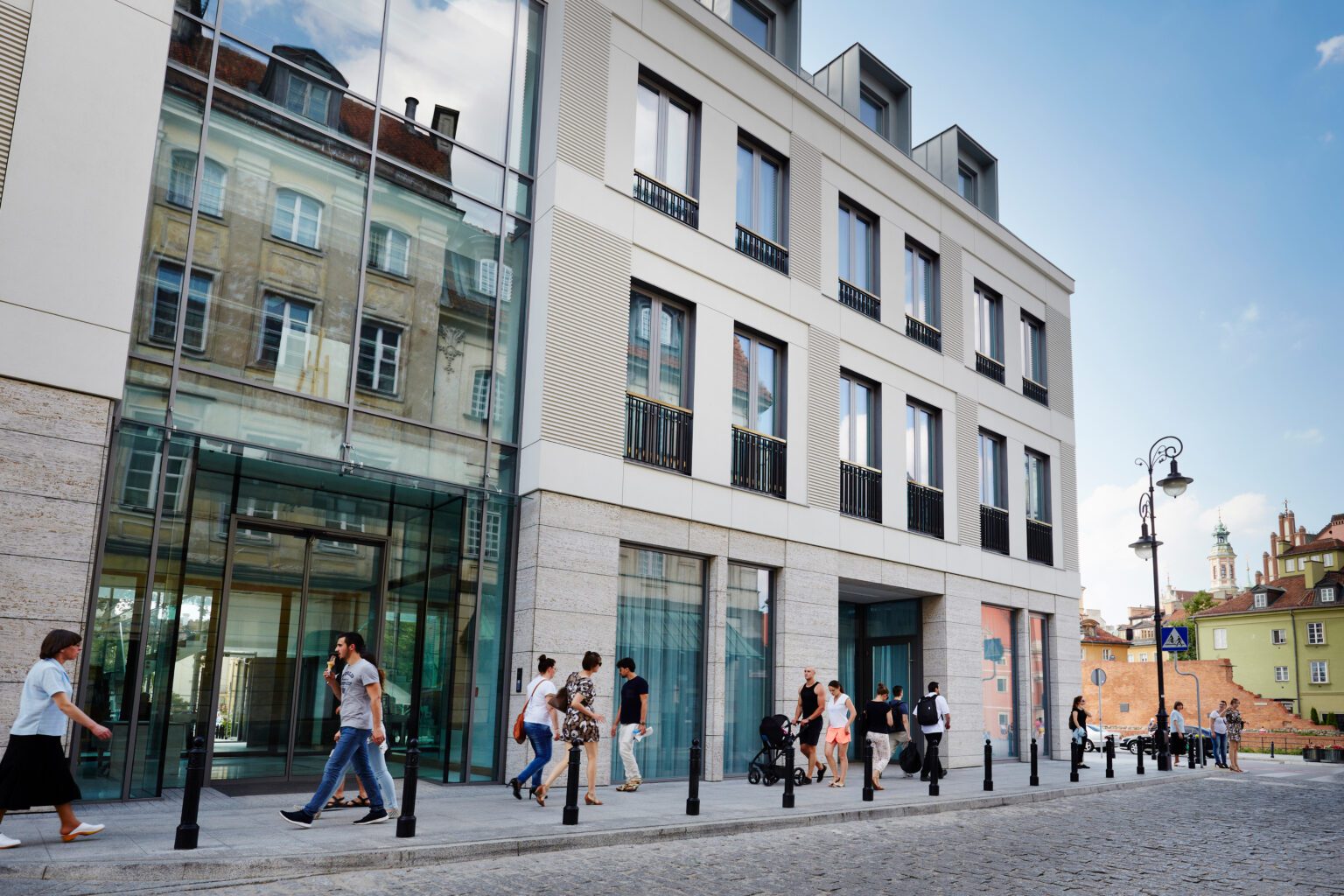
- Next to the Old Town
- Metro M1 and M2 on foot
- Garage places for rent
Office space in Warsaw splits into the centre, around Śródmieście, Rondo ONZ and Rondo Daszyńskiego, and the office districts outside it: Służewiec and Mokotów in the south, the Aleje Jerozolimskie corridor and the airport zone in the west, Praga on the east bank.
The choice comes down to four things: rent, how much is free to rent, how people get to work, and parking. Below are the 2026 figures for each, a calculator for your team size, and a worked example.
Centre vs outside, in 2026
Rents and vacancy in every Warsaw office zone
Ten zones, from the high-rise centre to Służewiec. The centre is dearer and fuller; the south and west are cheaper and emptier.
| Zone | Asking rent | Vacancy | Stock |
|---|---|---|---|
| Central Business District (COB) | EUR 18-32 | 5.9% | 994,000 m² |
| Centre (excl. Rondo Daszyńskiego) | EUR 18-28 | 8.1% | 1.05 m m² |
| Rondo Daszyńskiego (Wola) | EUR 20-28 | 5.4% | 897,000 m² |
| Mokotów (excl. Służewiec) | EUR 14-18 | 4.4% | 395,000 m² |
| Puławska | EUR 14-17 | 6.4% | 193,000 m² |
| East (incl. Praga) | EUR 13-17 | 6.4% | 284,000 m² |
| West | EUR 13-17 | 11.4% | 219,000 m² |
| Aleje Jerozolimskie | EUR 14-18 | 12.0% | 758,000 m² |
| Żwirki i Wigury (airport) | EUR 14-18 | 15.4% | 261,000 m² |
| Służewiec | EUR 12-17 | 18.7% | 987,000 m² |
Asking rent per m² a month, vacancy and stock by zone: Knight Frank, Warsaw, end of Q1 2026 (zone names translated). City-wide vacancy at end of June 2026: 8.5% (JLL). Darker cells mean more empty offices, which usually means more room to negotiate.
What an office costs for your team
Choose the team size and the zone. Left: a conventional lease. Right: a flexible office in the same part of the city.
Estimate, net of VAT: 12 m² per person, midpoint of the Knight Frank rent range, PLN 28 service charge per m², EUR 1 = PLN 4.375. Excludes parking, deposit and fit-out. A lease usually runs five years.
City centre vs outside at a glance
| City centre | Outside the centre | |
|---|---|---|
| Asking rent | EUR 18-32 per m² | EUR 12-18 per m² |
| Vacancy | 4.8% (central zones) | 11.8% (outside the centre) |
| New buildings coming | 93% of space under construction | Very little; some old buildings are being withdrawn |
| Metro | Both lines; Świętokrzyska is the interchange | M1 serves Mokotów; many outer zones rely on trams and buses |
| Street parking | Paid zone on weekdays 8:00-20:00 | Depends on the district; the paid zone grew in September 2026 |
| Clean transport zone | Covers most of Śródmieście | Mokotów, Służewiec and the western zones lie outside it |
| Lease length | Usually five years | Usually five years |
Rents: Knight Frank Q1 2026. Vacancy: JLL, June 2026. Construction: Newmark Polska, July 2026. Metro: M1 and M2 station lists. Parking and SCT: ZDM. Lease length: Colliers.
A worked example: 10 people, centre or Służewiec
The rent gap is about PLN 4,500 a month for 120 m². Three colleagues who drive into the centre and park on the street close more than half of it.
- EUR 23 per m², the centre’s midpoint
- PLN 28 per m² service charge
- Usually a five-year lease
- EUR 14.50 per m², the zone’s midpoint
- PLN 28 per m² service charge
- 18.7% vacancy: room to negotiate
- PLN 38.80 for an 8-hour day in the paid zone
- Times 21 working days
- A garage place averages about PLN 450
Our arithmetic for a team of 10 at 12 m² each, net of VAT, EUR 1 = PLN 4.375. Parking: ZDM hourly rates (PLN 4.50, 5.40, 6.40, then 4.50 an hour); garage average from BNM Real Estate Advisory, September 2026.
Parking and the clean transport zone
Central Warsaw is inside the paid street-parking zone (SPPN), which charges on weekdays from 8:00 to 20:00. The first hour costs PLN 4.50, the second PLN 5.40, the third PLN 6.40 and every hour after that PLN 4.50. A full working day comes to PLN 38.80 per car.
Since July 2024 most of Śródmieście is also a clean transport zone (SCT). From January 2026 petrol cars built before 2000 (below Euro 3) and diesels built before 2009 (below Euro 5) may not enter, with exemptions for Warsaw residents who pay tax in the city until the end of 2027. A visitor with a non-compliant car may enter four days a year; the fine is up to PLN 500.
For a team that drives, the centre therefore costs more than the rent table shows. For a team that takes the metro, the centre is the easiest place in the city to reach.
Walking from Workin to the metro and the airport bus
| From Senatorska 2 to | Distance | On foot |
|---|---|---|
| Royal Castle | 307 m | about 4 min |
| Plac Piłsudskiego (bus 175 from the airport) | 684 m | about 9 min |
| Ratusz Arsenał (M1) | 937 m | about 12 min |
| Nowy Świat-Uniwersytet (M2) | 1,290 m | about 16 min |
| Świętokrzyska (M1 and M2) | 1,690 m | about 21 min |
Walking distances from Senatorska 2, routed on OpenStreetMap data (OSRM foot profile) at 80 m a minute; measured to the station’s centre, so the nearest entrance is usually a little closer.
A small office in the centre without the five-year lease
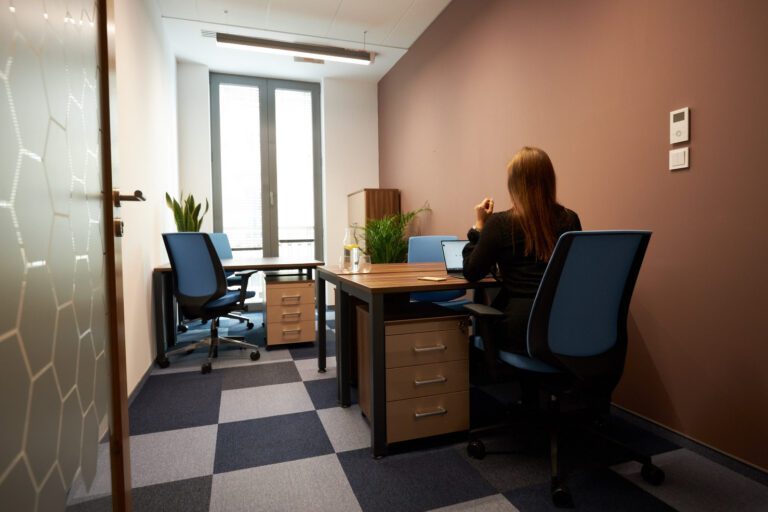
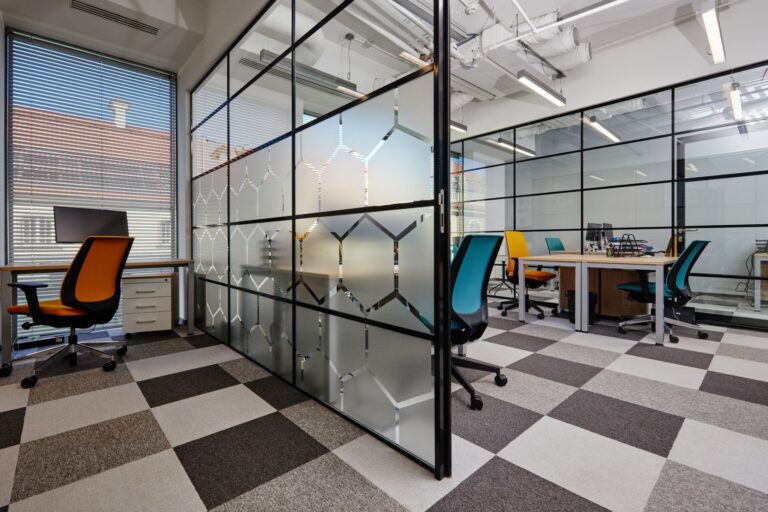
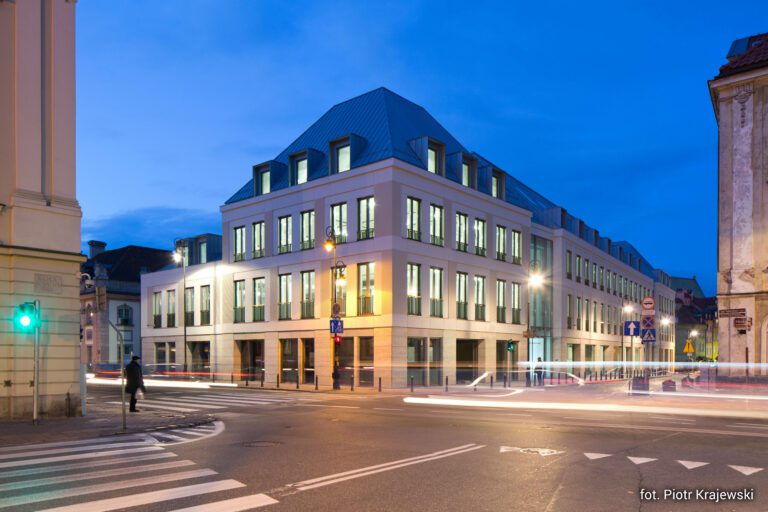
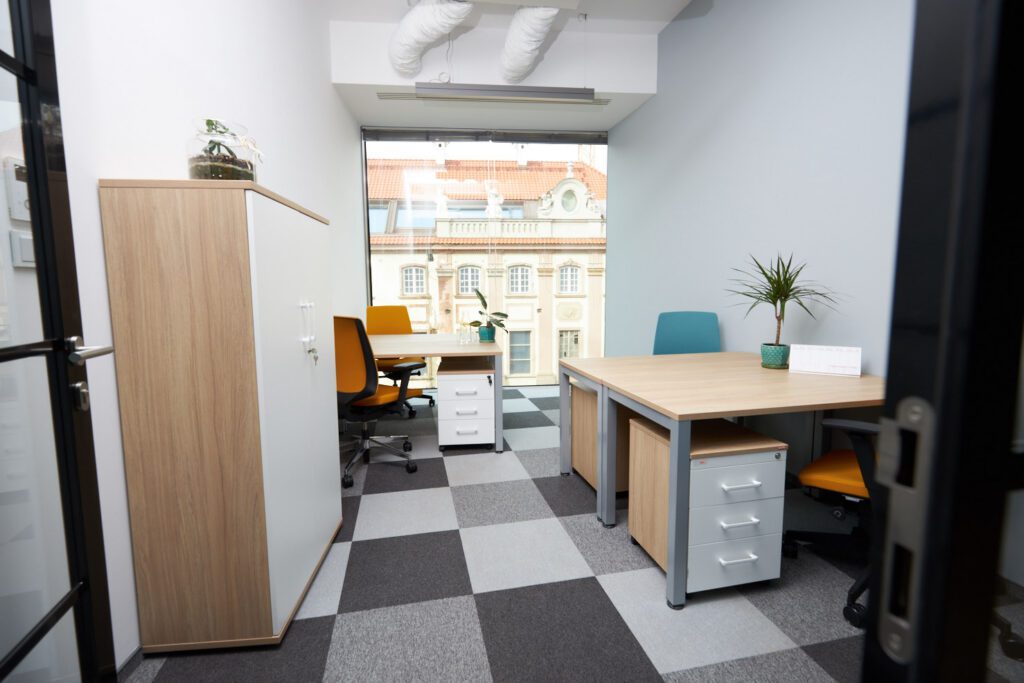
Workin has 40 serviced offices in a class-A building at the corner of Senatorska and Miodowa streets, 307 m from the Royal Castle. Contracts start from one month, and furniture, internet, cleaning, utilities and reception are in the price.
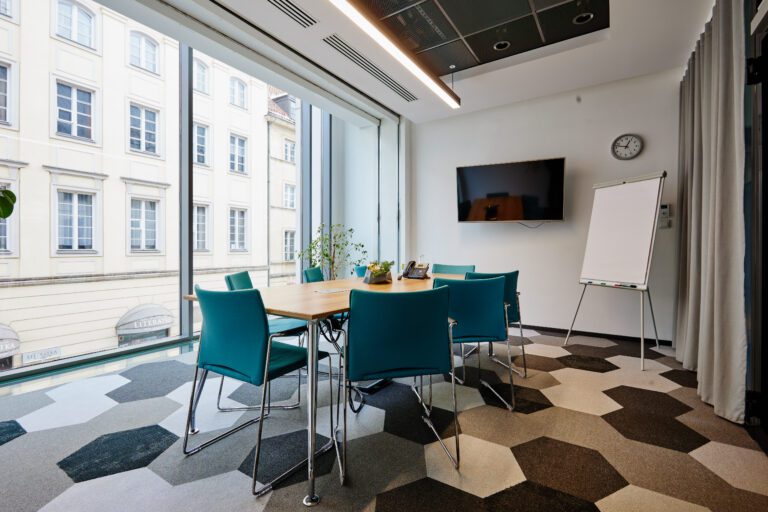
For client meetings there are five conference rooms for 8 to 14 people, and an event space for up to 150. Places in the underground garage are available to rent.
- 40 offices
- From 1 month
- 24/7 access
- Class-A building
What you can rent at Workin
Serviced office
- From one month
- Furnished, utilities and reception included
- Registered address possible
Meeting rooms
- Five rooms for 8 to 14 people
- From one hour, seven days a week
- Royal room with a castle view
Virtual office
- Senatorska 2 as your registered address
- Mail scanned and forwarded
- From PLN 239 net a month
More on the costs of flexible offices in our guide to serviced offices in Poland, and on central coworking in why the city centre works for coworking. Directions: our location.
Questions about office space in Warsaw
How much does office space in Warsaw cost?
Knight Frank put asking rents at EUR 18-32 per m² a month in central zones and EUR 12-18 outside the centre at the end of Q1 2026, plus a service charge of PLN 18-38 per m² and 23% VAT.
Is it easier to find an office outside the centre?
Yes. At the end of June 2026, 11.8% of offices outside the centre stood empty against 4.8% in central zones (JLL). Służewiec had the most free space, at 18.7% in Q1 2026.
Which Warsaw office district is cheapest?
Służewiec has the lowest asking rents in Knight Frank’s zone table, EUR 12-17 per m², followed by the east and west zones at EUR 13-17.
Is parking a problem in central Warsaw?
Street parking is paid on weekdays from 8:00 to 20:00, about PLN 39 for a full day, and most of Śródmieście is a clean transport zone. Workin rents places in its underground garage.
How do I reach Workin by public transport?
Ratusz Arsenał (M1) is about 12 minutes on foot and Nowy Świat-Uniwersytet (M2) about 16. Bus 175 from Chopin Airport stops at Plac Piłsudskiego, about 9 minutes away.
Do I need a five-year lease for an office in the centre?
Conventional leases usually run five years. A serviced office at Workin starts from one month.
See the offices at Castle Square before you sign anywhere
Tell us the team size and the start date. We reply the same day, or the next business day at the latest.